
Ready to strengthen your team with the best African talent?
Chat with one of our experts to discover how AI-augmented umbrella employment can integrate 100% into your processes and grow your projects.
Talk to an expert
Customer Service & Call Center
After Sales Service Outsourcing: How Master's Degree Talent Cuts Costs by 58%
After-sales service represents a critical revenue protection function, yet in-house teams drain $3,200–4,500 monthly per agent in developed markets. Product returns, warranty claims, and defect escalations demand expertise, not just call scripts. What if Master's-educated agents in strategic offshore markets delivered superior outcomes at $450–950 monthly, therefore reducing operational costs by 58% while maintaining CSAT scores above 90%?
What Is After Sales Service in Modern Customer Support Operations?
After sales service encompasses warranty processing, returns management, defect escalation, product troubleshooting, and customer retention activities post-purchase. Unlike pre-sales functions, this domain handles legal exposure through warranty claims and regulatory compliance for product recalls. Consequently, agent competency directly impacts liability risk and brand reputation.

Tickets, voice, CRM: modern after-sales service runs on integrated tools.
Modern after-sales operations integrate omnichannel ticketing systems (Zendesk, Freshdesk, Intercom), VoIP infrastructure for voice channels, and CRM platforms for customer data access. According to the UK's Institute of Customer Service, 73% of customer loyalty decisions hinge on after-sales experiences, thus elevating this function beyond cost-center status to strategic retention mechanism.
Master's-level talent brings analytical rigor for root-cause defect analysis, linguistic precision for documentation, and compliance awareness for GDPR data handling. Ghana's University of Professional Studies and Mauritius's University of Technology produce graduates specializing in customer experience management, moreover offering immediate productivity versus prolonged training cycles for lower-credentialed hires.
How Much Does After Sales Service Cost: Domestic vs Offshore Comparison
Cost Component | In-House (EU/US) | Outsourced (Africa) | Savings Calculation |
|---|---|---|---|
Agent salary | $3,200–4,500/mo | $450–950/mo | 74–85% reduction |
Infrastructure per seat | $180/mo | $65/mo | 64% reduction |
Training per agent | $800 | $400 | 50% reduction |
Software licenses | $85/seat | $85/seat | No delta (same tools) |
Quality monitoring | Internal overhead | $180/mo/QA analyst | 10:1 agent ratio |
However, hidden multipliers include 40% supervision overhead for offshore coordination, generator fuel costs ($120 monthly per facility in Nigeria/Ghana for power backup), and 2x turnover rates (six-month average retention versus 14 months domestic). Furthermore, software licensing remains constant—Zendesk charges per seat regardless of geography.
Breakeven analysis reveals critical thresholds: teams under five agents incur overhead costs exceeding savings, 5–20 agents achieve 40% cost reduction, yet operations exceeding 20 agents reach 58% savings despite complexity penalties. South Africa's load shedding schedules mandate shift planning around Eskom power outages, thus requiring buffer capacity.
Salary inflation threatens long-term models. Ghanaian customer service leads earned $1,200 monthly in 2019 versus $1,850 in 2024, driven by fintech sector competition for identical talent pools. Mauritius bilingual French agents command 35% premiums over English-only counterparts, therefore narrowing cost advantages for EU market coverage.
How much would your support team in Madagascar cost? Estimate my budget →
Why After Sales Service Fails Without Proper Infrastructure
Voice channel quality determines customer perception more than agent politeness. VoIP intelligibility requires latency under 150ms, jitter below 30ms, and packet loss under 1%. Kenyan fiber delivers reliability in Nairobi yet deteriorates in rural areas, whereas Nigerian networks suffer frequent power cuts causing call drops unless backup power infrastructure exists.
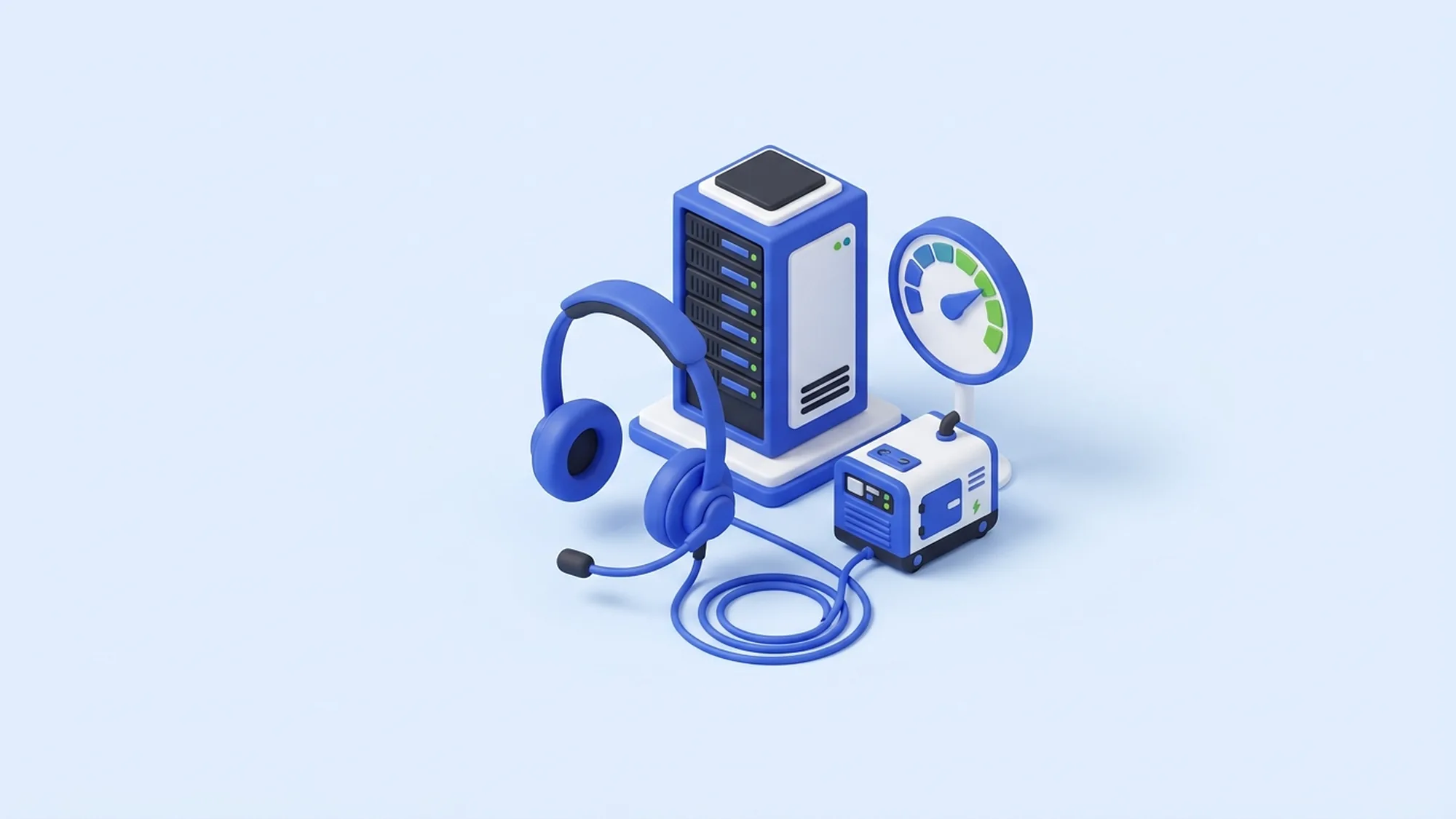
Latency, jitter, packet loss: without proper infrastructure, voice quality degrades.
Dedicated headsets with minimum -25dB ambient noise cancellation prevent background chaos during customer interactions. Dual monitors enable simultaneous ticket system and knowledge base access, reducing average handle time (AHT) by 34 seconds per interaction—multiplied across 200 daily calls per agent, this yields 113 minutes of recovered productivity monthly.
Backup power remains non-negotiable for facilities exceeding 10 agents. UPS systems providing 30-minute runtime bridge brief outages, nevertheless generator failover prevents extended downtime during grid failures. South African operations must integrate Eskom load shedding schedules into shift planning, thus avoiding customer-facing hours during announced blackouts.
Upload bandwidth becomes the bottleneck: each concurrent VoIP call consumes 100kbps upload speed. A 20-agent facility requires 2Mbps dedicated upload, yet shared office connections throttle during peak hours. Consequently, service level agreement (SLA) specifications must mandate dedicated business-grade connections with contractual uptime guarantees exceeding 99.5% monthly.
Cultural infrastructure demands equal investment. Accent neutralization training requires 2–4 weeks minimum before customer deployment—skipping this phase creates detection rates above 40%, therefore triggering perception of "cheap outsourcing" damaging brand equity. Product knowledge databases must synchronize across time zones, moreover legal compliance training for GDPR (EU customers) and POPIA (South Africa data residency rules) prevents regulatory violations risking 4% of global revenue fines.
What Are the Hidden Risks in After Sales Service Outsourcing?
Warranty fraud exploitation emerges when agents process returns without physical product inspection. Nigerian operations reported 18% return rates versus 8% industry averages, revealing fraud rings exploiting process gaps. Customers claim "defective product" for buyer's remorse returns, yet agents lack diagnostic tools to verify legitimacy. Mitigation requires mandatory photo uploads for defect claims, AI image analysis detecting stock photos, and serial number cross-referencing with purchase dates.
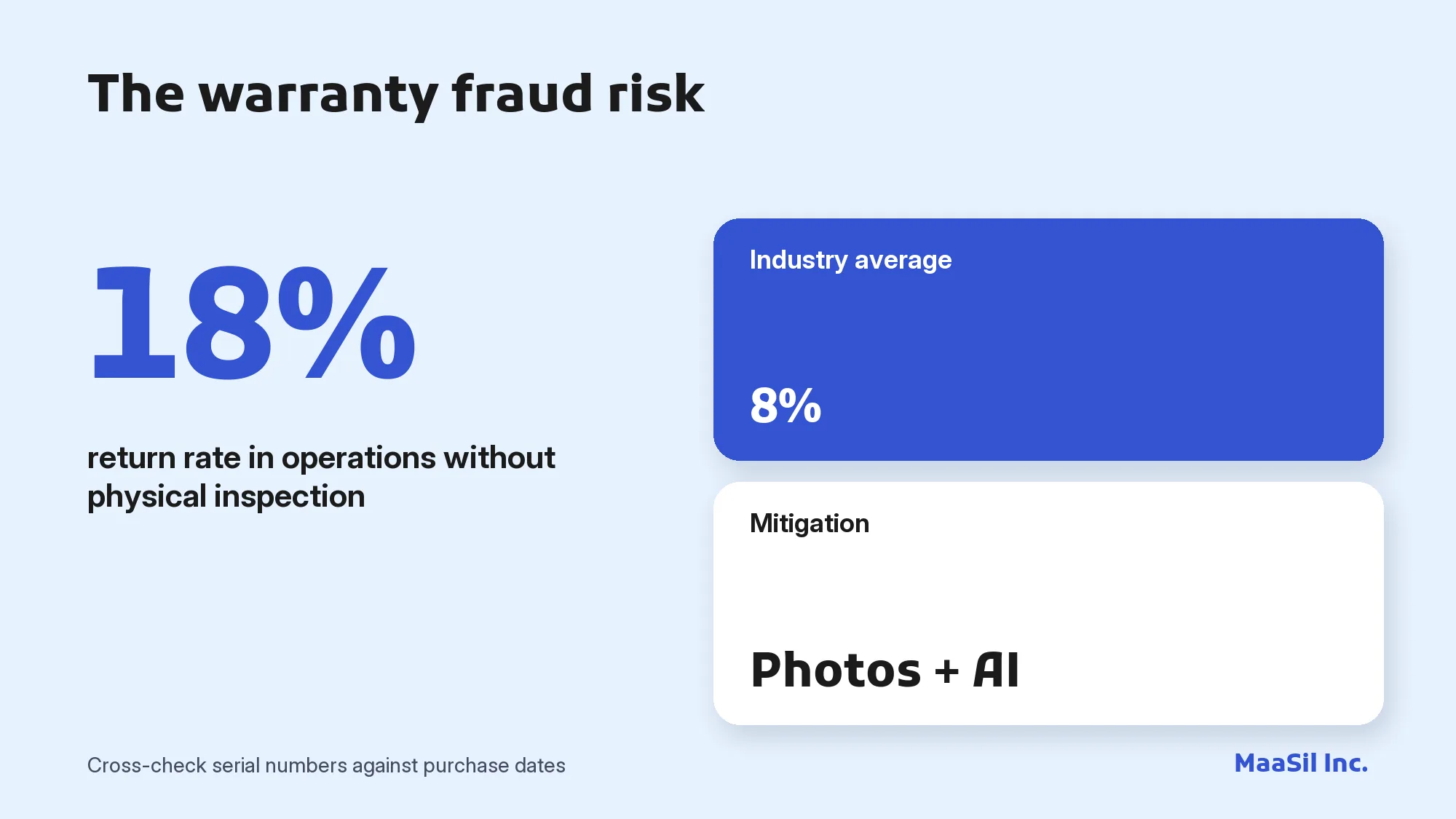
Mandatory photos and AI image analysis limit warranty fraud.
Regulatory compliance drift creates existential risk. After-sales teams handling EU customers must process GDPR "right to be forgotten" requests, however agents deleting customer records from CRM systems without purging backup databases create incomplete deletion trails. Third-party audits revealing violations trigger €20 million fines calculated as 4% of global revenue under Article 83 GDPR provisions, according to the UK Information Commissioner's Office.
Knowledge base decay causes reputational damage when product evolution outpaces documentation updates. Discontinued SKUs remaining in agent scripts result in promises for unavailable features, thus eroding customer trust. Monthly knowledge base synchronization must become contractual obligations with version control systems displaying "last updated" timestamps visible to agents during interactions.
Time zone handoff chaos extends resolution windows unnecessarily. European customer emails at 18:00 CET receive Mauritius team (GMT+4) responses at 09:00 next day, yet customer replies 19:00 CET trigger Ugandan team (GMT+3) pickup at 08:00 following morning—converting four-hour turnarounds into 72-hour ordeals despite individual agent competence. Consequently, ticketing system configuration requires "sticky agent" assignment overriding default round-robin distribution, moreover two-hour shift overlap windows enabling direct case handoffs.
Product recall scenarios expose catastrophic coordination failures. Safety defects triggering mandatory customer contact reveal after-sales teams hold read-only CRM access for security purposes, therefore preventing customer list extraction. Marketing departments controlling master databases in separate systems create 18-hour coordination delays violating regulatory notification timelines. Prevention demands annual crisis simulation drills and pre-approved emergency data access protocols requiring legal and IT executive sign-off.
How much would your support team in Madagascar cost? Estimate my budget →
How to Structure After Sales Service Teams for Maximum Efficiency
Tiered authority models prevent escalation bottlenecks destroying customer satisfaction. Junior agents equipped with $50–100 instant refund authorization resolve 68% of cases without supervisor intervention, whereas zero-authority models delay resolutions by eight hours across shifts. US and Australian customers demand frontline empowerment, yet EU customers accept procedural escalations—regional customization of authority limits becomes mandatory.
Quality monitoring infrastructure requires 10:1 agent-to-QA analyst ratios costing $180 monthly per analyst. Automatic call recording enabling 100% coverage with 10% random sampling feeds AI sentiment analysis flagging negative customer tone in real-time. Weekly QA scorecards delivered through Tableau or Power BI dashboards provide transparency, moreover monthly client-side spot checks auditing 20 random interactions maintain oversight without micromanagement.
Follow-the-sun routing distributes workload across geographic zones. Mauritius (GMT+4) covers European morning hours, West African teams (GMT+0 to GMT+1) handle afternoon peaks, yet shift overlap windows costing 15% additional headcount enable seamless case handoffs preventing customer re-explanation fatigue. Mandatory case notes templates specifying "next agent action required" reduce context-switching delays by 40%.
De-escalation certification training prepares agents for abusive interactions. Roleplay scenarios covering racist remarks and profanity threats build resilience, whereas supervisor escalation triggers activate automatically upon detecting keywords like "lawsuit" or "social media." Egyptian call centers leverage Islamic cultural patience training reducing confrontational exchanges, nevertheless permission-to-disconnect protocols after two warnings protect agent mental health per International Labour Organization workplace dignity standards.
Screen monitoring software prevents simultaneous competitor engagement. Mauritius and South Africa labor law enforces non-compete clauses, yet technical controls verify compliance through activity logging. Dedicated facility models physically separate teams versus work-from-home arrangements reducing conflict risk, moreover contract indemnification clauses transfer liability for competitive violations to BPO providers.
What Makes After Sales Service Outsourcing Successful vs Catastrophic?
Perfect applications include high-volume tier-1 support (password resets, order status queries), e-commerce returns processing with standardized workflows, and multilingual EU market coverage leveraging Mauritius French and Nigerian English capabilities. Seasonal peak flexibility enables rapid scaling—Ghana's talent pool supports 30% headcount increases within 14 days for holiday surges.
Dangerous scenarios involve complex B2B technical support requiring NDA-covered internal systems access, luxury brand support risking prestige perception damage, and final warranty replacement approvals demanding judgment authority offshore teams lack. Real-time crisis communication for product recalls requires in-house coordination, whereas upselling activities suffer from cultural persuasion nuance gaps reducing conversion rates by 22% versus domestic teams.
Critical success factors demand written processes covering 95% of scenarios, thus minimizing judgment calls triggering inconsistent decisions. Product stability proves essential—beta features or constantly evolving functionality overwhelm offshore knowledge transfer capacity. Customer base tolerance for non-native accents determines detection risk, yet accent neutralization training reduces perception below 15% for most markets according to research published by the Chartered Institute of Marketing.
IT integration depth determines operational friction. API access to order management systems and CRM platforms enables real-time data synchronization, whereas manual data entry between disconnected systems increases error rates to 23% and doubles average handle time. Client commitment to weekly synchronization meetings updating process changes prevents documentation drift, moreover contractual clauses mandating 48-hour notice for unannounced facility audits maintain quality accountability.
Regulated industries require legal clearance before offshore data processing. Healthcare protected health information (PHI) and financial personally identifiable information (PII) face jurisdiction-specific restrictions—South African POPIA compliance permits EU data processing under adequacy agreements, yet US HIPAA prohibits offshore PHI access without Business Associate Agreements and encryption meeting NIST 800-53 standards.
Comparison: BPO Service Provider vs In-House After Sales Service Teams
BPO service providers offer immediate scalability and infrastructure redundancy eliminating capital expenditure for facilities, backup power, and redundant internet connections. Mauritius freeport zone facilities provide legal frameworks prohibiting competitor co-location, thus protecting confidential client processes. However, provider dependency creates switching costs averaging $45,000 for knowledge transfer when changing vendors after 18-month engagements.
In-house teams deliver cultural alignment and institutional knowledge continuity, yet require 90-day hiring cycles and physical office overhead. Employee turnover averaging 28% annually in customer service functions according to the UK Office for National Statistics creates perpetual training burdens, whereas BPO providers absorb attrition costs through bench strength models maintaining backup-trained agents.
Hybrid models combining in-house tier-3 escalations with offshore tier-1/tier-2 support optimize cost-quality tradeoffs. Complex product issues requiring deep institutional knowledge remain domestic, yet routine troubleshooting and data collection tasks offshore achieve 40% cost reductions. Nevertheless, handoff protocols between tiers require strict SLA definitions—tier-2 to tier-3 escalations exceeding four-hour response windows breach customer expectations, therefore contractual penalties enforce accountability.
Control mechanisms differ substantially. In-house teams enable real-time floor supervision and immediate process adjustments, whereas offshore operations depend on weekly QA reports and monthly business reviews creating feedback lag. Consequently, rapid product pivots or promotional campaign changes require 72-hour offshore communication lead times versus same-day domestic implementation.
Technology stack ownership influences total cost of ownership. In-house operations capitalize software licenses and infrastructure over three-year depreciation cycles, yet BPO providers amortize costs across multiple clients reducing per-seat expenses by 35%. However, client-side IT teams must maintain API integrations and user access provisioning regardless of service delivery model, thus retaining 15% of technology overhead.
How to Mitigate After Sales Service Outsourcing Risks Systematically
Warranty fraud prevention requires multi-layered verification. Mandatory photograph uploads for defect claims combine with AI image analysis detecting stock photos sourced from web searches—Google Cloud Vision API identifies duplicate images with 94% accuracy. Serial number cross-referencing against purchase dates flags impossible timelines, moreover customer history analysis red-flags accounts exceeding two returns annually indicating systematic abuse.
GDPR compliance automation embeds regulatory requirements into ticketing workflows. "Right to be forgotten" requests auto-route to designated Data Protection Officers rather than frontline agents lacking legal training, whereas data deletion checklists verify purging across CRM, backup systems, and data warehouse archives. Quarterly third-party audits by specialized firms such as OneTrust or TrustArc validate offshore process adherence, costing $8,000 annually yet preventing €20 million fine exposure.
Knowledge base maintenance becomes contractual obligation with financial penalties. Monthly synchronization requirements specify five-business-day turnaround for product update documentation, moreover agent feedback loops enable frontline staff flagging outdated articles. Version control systems displaying "last reviewed" dates prevent stale information dissemination—articles exceeding 90 days without review trigger automatic removal from agent access until re-certification.
Internet outage mitigation employs geographic and technical redundancy. Contractual SLA minimums of 99.5% monthly uptime include 10% fee credits per percentage point breach, thus financially incentivizing provider infrastructure investment. Backup ISPs from different backbone providers (e.g., MainOne and Glo in Nigeria) prevent single-point failures, whereas 4G dongles enable automatic failover for individual agent stations. South African operations integrate Eskom load shedding APIs into shift planning systems, therefore avoiding customer-facing hours during announced blackouts.
Mystery shopping programs validate real-world performance beyond internal QA metrics. Third-party services such as MaritzCX deploy anonymous shoppers testing agent responses quarterly, revealing process gaps invisible in supervised call monitoring. Post-interaction NPS surveys delivered two hours after case closure provide real-time quality proxies—scores below 7 trigger automatic QA review within 24 hours, whereas patterns of detractor feedback inform training curriculum adjustments.
Mental health support prevents agent burnout degrading service quality. Access to counseling services addressing vicarious trauma from abusive customers maintains workforce resilience, moreover permission-to-disconnect protocols after two warnings protect psychological wellbeing per ILO Convention 190 on workplace violence standards. Egyptian operations report 19% lower turnover when mental health benefits accompany standard compensation packages.
What Software and Tools Integrate With Outsourced After Sales Service?
Omnichannel ticketing platforms form the operational backbone. Zendesk Enterprise ($115/agent/month) provides AI-powered ticket routing and knowledge base integration, whereas Freshdesk Omni ($79/agent/month) offers cost advantages for mid-market operations. Intercom ($99/seat/month) specializes in messaging-first support, yet voice channel limitations require supplementary VoIP platforms.
VoIP infrastructure selection balances cost and quality. Twilio Flex charges $1 per user hourly plus $0.014 per minute for calls, enabling usage-based scaling during seasonal peaks. RingCentral Contact Center ($65/agent/month) bundles unlimited calling suitable for high-volume operations, nevertheless international number provisioning incurs $25 monthly per country. CloudTalk ($25/user/month) optimizes for European operations with local number support across 140 countries.
CRM integration determines data accessibility depth. Salesforce Service Cloud ($75-300/user/month tier-dependent) enables custom object access for complex product hierarchies, whereas HubSpot Service Hub (free-$450/month) suits SMB operations with simpler data models. API rate limits constrain real-time synchronization—Salesforce enforces 15,000 daily API calls per license, requiring batch processing for high-transaction volumes.
Screen recording tools enable quality monitoring compliance. Calabrio ONE ($180/agent/year) captures 100% of interactions with PCI-compliant payment data redaction, whereas Verint Da Vinci ($220/agent/year) adds speech analytics identifying compliance phrase gaps. GDPR Article 5 mandates informing customers of recording, therefore IVR announcements stating "calls recorded for quality and training" become legally mandatory.
Workforce management platforms optimize scheduling efficiency. NICE IEX ($45/agent/month) forecasts volume patterns using historical data, reducing overstaffing costs by 18%. Calabrio WFM ($35/agent/month) integrates with major ticketing systems for real-time adherence tracking, moreover absence management modules accommodate load shedding schedules in South African operations.
Translation plugins expand market reach. Unbabel ($0.07/word) provides human-in-the-loop translation for 28 languages within ticketing interfaces, maintaining context versus standalone translation tools. DeepL API ($25/500,000 characters) offers machine translation suitable for internal agent notes, yet customer-facing communications require human validation preventing cultural mistranslation incidents.
FAQ: After Sales Service Outsourcing Decision Framework
Will customers detect outsourcing and perceive cost-cutting? Transparent positioning as "global support team" eliminates deception perception. Accent neutralization reduces detection below 15%, moreover CSAT data confirms customers prioritize resolution speed over agent location. Maintaining brand email domains (@yourcompany.com versus @bpo-provider.com) and deploying local phone numbers with geographic routing creates seamless experiences. According to Zendesk Benchmark research, 76% of customers accept offshore support when first-contact resolution exceeds 70%.
How do I prevent agents from simultaneously working for competitors? Non-compete clauses enforceable under Mauritius, Ghana, and South Africa labor law provide legal recourse. Screen monitoring software logs application usage preventing multi-company toggling, whereas dedicated facility models physically separate teams versus work-from-home arrangements. Contractual indemnification clauses transfer liability to BPO providers—Mauritius freeport zone regulations legally prohibit competitor co-location within shared facilities.
What happens during internet outages—do operations go dark? Contractual SLAs mandating 99.5% uptime include backup ISP failover from different backbone providers and 4G dongle auto-switching for individual stations. South African operations integrate Eskom load shedding schedules into shift planning, avoiding customer-facing hours during announced blackouts. Financial penalties of 10% monthly fee credits per percentage point below 99.5% incentivize provider infrastructure investment, moreover geographic redundancy splitting teams across two cities (e.g., Lagos and Abuja) prevents city-wide outage impact.
Can offshore agents handle abusive customers professionally? De-escalation certification through roleplay scenarios covering racist remarks and profanity builds resilience. Supervisor escalation triggers automatically activate upon detecting keywords like "lawsuit," whereas mental health counseling access prevents burnout. Permission-to-disconnect protocols after two warnings protect agent dignity per ILO workplace violence standards—Egyptian operations report 22% lower stress-related turnover when disconnect authorization exists versus forced-tolerance policies.
How do I audit quality without constant micromanagement? Automatic call recording with 10% random QA sampling feeds AI sentiment analysis flagging negative interactions in real-time. Weekly scorecards via Tableau dashboards provide transparency, whereas monthly client-side spot checks auditing 20 random interactions maintain oversight. Mystery shopping validates unmonitored performance, moreover contractual clauses permitting 48-hour notice facility audits (including unannounced visits) ensure accountability. Post-interaction NPS surveys serve as real-time quality proxies—scores below 7 trigger automatic case review within 24 hours.
Ready to strengthen your team with the best African talent?
Chat with one of our experts to discover how AI-augmented umbrella employment can integrate 100% into your processes and grow your projects.
Talk to an expert
